Fighting in Ukraine Forces Two Million to Flee as Russia Presses Offensive

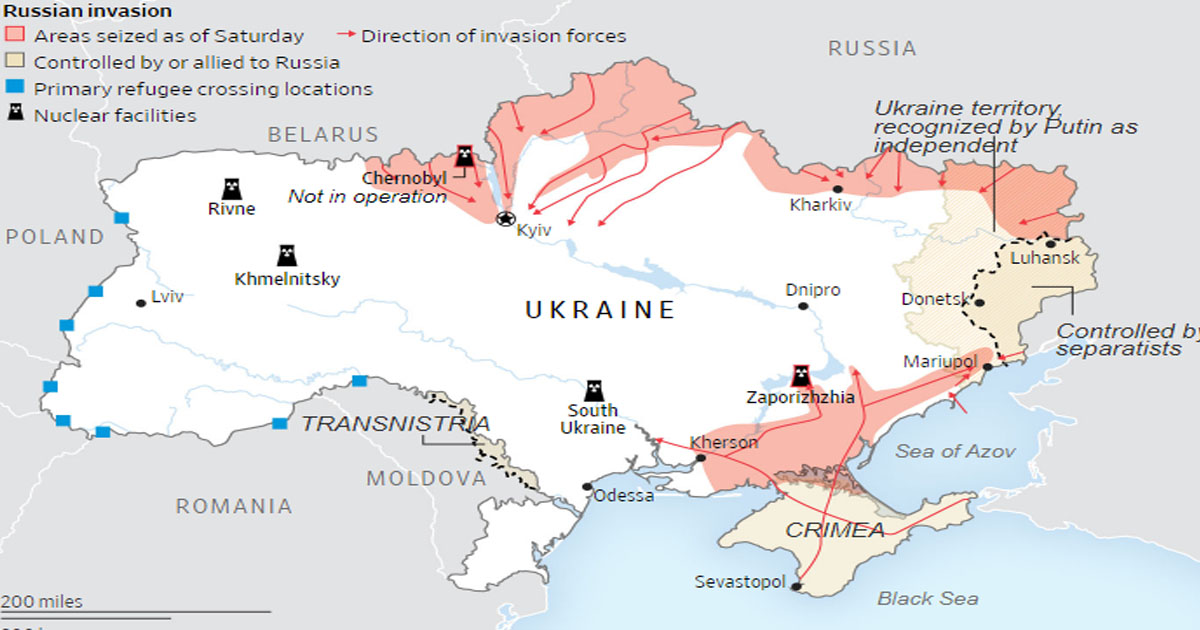
At least 700,000 people lacked electricity and heating across the country because of the destruction of civilian infrastructure, Ukrainian officials said. The country’s second-largest city of Kharkiv has been hit heavily by Russian attacks, with many of its 19th-century and early 20th-century buildings downtown reduced to rubble.
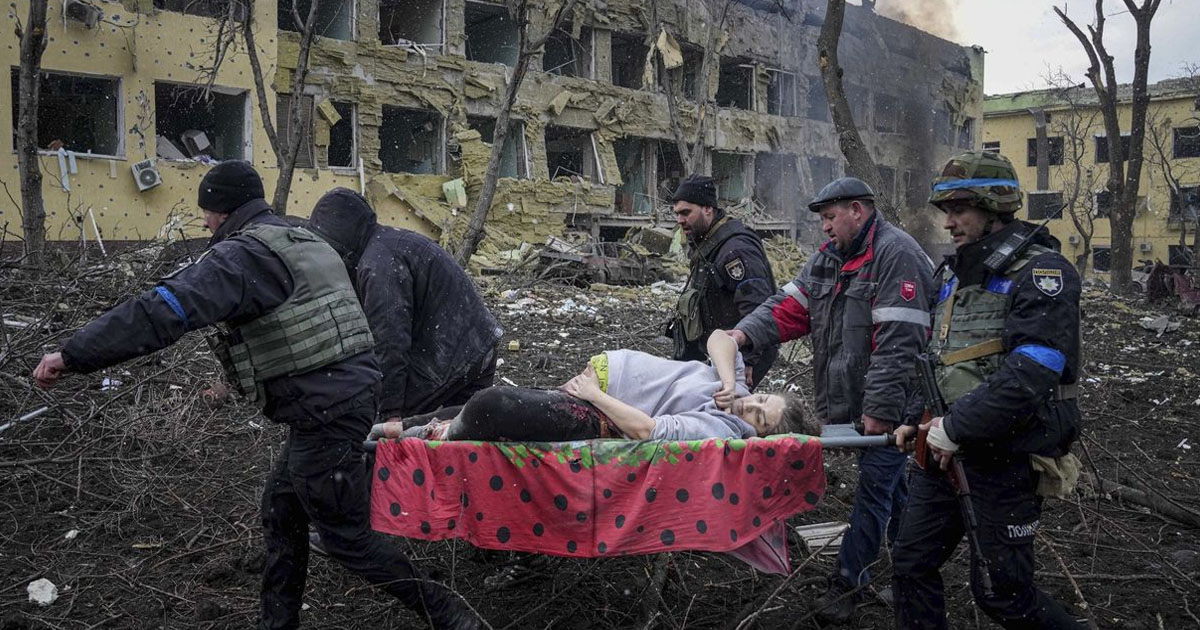
Russia continues to prevent an evacuation from Mariupol despite agreements reached via the International Committee of the Red Cross, Ukrainian Foreign Minister Dmytro Kuleba said Tuesday. “War crimes are part of Russia’s deliberate strategy,” he said.
In Sumy, a regional capital of 260,000 people, Russian aerial bombardments overnight hit several residential high-rises, killing 19 adults and two children, the regional prosecutor’s office said. The regional government added that Ukrainian forces using Turkish-made drones were able to hit and destroy three Russian columns moving to attack the city.
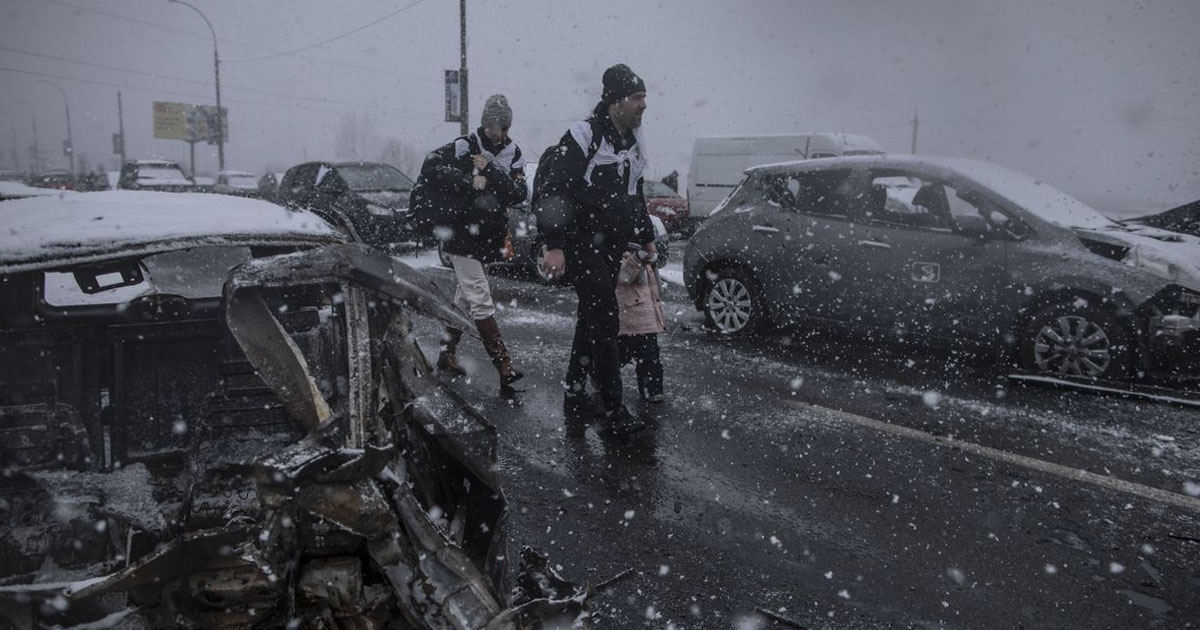
Ukraine’s Deputy Prime Minister Iryna Vereshchuk said Tuesday that, in an agreement with Russia brokered by the ICRC, civilians would be able to start leaving Sumy toward the city of Poltava in the morning, and that no combat activity would be conducted in the area until 9 p.m., offering the opportunity to resupply Sumy’s population with food and medicine.
In the late morning, civilians in Sumy started boarding evacuation buses, and the first convoy, mostly made up of foreign students, safely reached Poltava. As the second convoy was about to depart, a Russian convoy including a tank on the city’s outer ring road came close to a Ukrainian checkpoint and opened fire, said Sumy Gov. Dmytro Zhyvytski in a video message. The evacuation effort resumed later, with buses and private cars leaving the city for Poltava.
“This incident has confirmed that there is no 100% security in leaving the city. Decide for yourselves whether it is more dangerous to stay or to leave,” Mr. Zhyvytski told Sumy’s residents.
Russia’s Defense Ministry said Tuesday it had opened what it said were humanitarian corridors out of Kyiv, Chernihiv, Kharkiv and Mariupol in addition to Sumy. Ukrainian officials said that only the corridor out of Sumy has been coordinated by both sides, for now. Russia is offering to organize the evacuation of Ukrainian civilians to Russia or to the Russian-controlled statelets in the Donbas area of eastern Ukraine, something Kyiv rejects.
A third round of talks between Russia and Ukraine on how to end the war, held in Belarus on Monday, failed to achieve much progress as Kyiv refused to accept Russian demands that it recognize the 2014 annexation of the Crimean Peninsula by Russia and the independence of the Russian-created statelets in the Donbas region. Despite the Russian offensive, Ukrainian forces continued to hold most of the population areas in Donbas that they controlled before the invasion began.
“The discussion is difficult and talking about something positive is too early,” Russia’s chief negotiator, presidential aide Vladimir Medinsky, said after the talks.
The Russian and Ukrainian foreign ministers are tentatively scheduled to meet on the sidelines of an international conference in Antalya, Turkey, on Thursday.
Mr. Zelensky released a video from his office in the presidential palace in Kyiv showing the familiar cityscape outside his window and pledging no surrender. “We are all here, working where we have to be. We are all at war, making a contribution to our victory, which is inevitable,” he said. Russian state media continued to report that Mr. Zelensky had fled the country.
Every day of continuing Ukrainian resistance creates a better negotiating position for Kyiv to end the war and guarantee the country’s peaceful future, Mr. Zelensky said.
In Izyum, eastern Ukraine, much of the city has been destroyed in the past several days by Russian bombing and artillery, said Natali Kirkach, who heads a volunteer group that has been evacuating civilians from there. “Conditions are still desperate and thousands still need to leave,” she said. The city has been without power for five days, and thousands of civilians have taken shelter at a tourist base near a monastery in the nearby town of Sviatohirsk, she said.
Russian infantry has penetrated the northern part of Izyum, up to the northern bank of the river that bisects it, Ms. Kirkach said. Bridges on the river have been blown up, and the Ukrainian army was pushing back to regain control Tuesday morning, Ukrainian officials said.
In Kharkiv, “the enemy has slowed down its offensive operations because all its attempts to enter Kharkiv are being repelled,” Gov. Oleh Synehubov said. “Our military has a high fighting spirit, and they keep receiving new weapons every day.”
Canadian Prime Minister Justin Trudeau joined British Prime Minister Boris Johnson and Dutch Prime Minister Mark Rutte for talks on Ukraine in London on Monday. “We recognized the Ukrainians’ heroic efforts, and we’ll keep working together—and with others—to respond to these blatant violations of international law,” Mr. Trudeau wrote on Twitter.

Polish President Andrzej Duda, in remarks after a phone call with Mr. Zelensky, said that if Mr. Putin believed that “by tearing down houses and killing civilians, he will break the will and spirit of the Ukrainians, he is wrong.”
Returning from a trip to the Polish-Ukrainian border, where the westward flow of refugees is continuing, Secretary of State Antony Blinken wrote on Twitter that he was “inspired by the Polish people’s welcoming of Ukrainian refugees after seeing it firsthand. The U.S. and Poland will continue to work together to respond to Russia’s aggression in Ukraine.”

Mr. Blinken spoke with Ukraine’s Mr. Kuleba about joint efforts to end “Putin’s war of choice.”